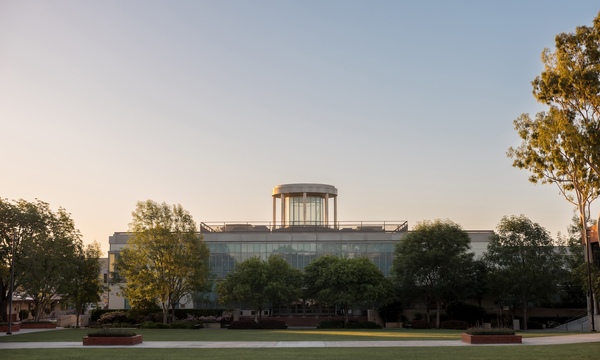
 Biola University
I still remember the first time I saw Andrew Cole play—it was during Manchester United's treble-winning season, and his partnership with Dwight Yorke felt like watching poetry in motion. Having followed football for over two decades, I've seen countless strikers come and go, but Cole's legacy remains uniquely compelling. His career wasn't just about the numbers, though they're staggering; it was about the moments that defined an era of English football. When I look at today's global football landscape, I'm reminded of comments like Philippine volleyball coach Sergio Suzara's recent observation about international competition: "Tunisia is not an easy team, also. They were African champions. Egypt also, and Iran, world-class 'yung Iran." This perspective resonates deeply when examining Cole's career—he thrived in an increasingly globalized Premier League, facing defenders from Africa, Europe, and beyond, much like modern athletes compete in truly world-class environments across sports.
What strikes me most about Cole's statistics is their sheer consistency across multiple clubs. People often focus on his Manchester United years, and rightly so—93 goals in 195 Premier League appearances for the Red Devils—but his earlier exploits at Newcastle United were equally remarkable. I've always felt his 41 goals in 58 games during the 1993-94 season doesn't get nearly enough attention. That's nearly a goal every 120 minutes, an astonishing rate even by today's standards. His transfer to Manchester United for £7 million, a British record at the time, created enormous pressure, yet he delivered with that characteristic coolness in front of goal. The numbers themselves tell only part of the story—it was his movement off the ball that truly set him apart. I've rewatched dozens of his goals, and what continues to impress me is how he consistently found space where none seemed to exist.
Cole's partnership with Dwight Yorke remains, in my opinion, the most telepathic striking duo the Premier League has ever seen. Their understanding seemed almost supernatural at times, particularly during the 1998-99 treble-winning campaign. I'll never forget that Champions League night against Barcelona at Camp Nou—the way they interchanged positions, created space for each other, and scored those crucial away goals demonstrated a level of synergy I haven't seen replicated since. Their combined 53 goals that season wasn't just statistical dominance; it was artistic collaboration. What many forget is that this partnership almost didn't happen—Cole had established himself as the main striker, and Yorke's arrival could have created tension. Instead, they developed this almost instinctual understanding that became the engine of United's historic achievement.
Beyond the glamour of Manchester United, Cole's resilience at other clubs often gets overlooked in popular narratives. His spells at Blackburn Rovers, where he won another Premier League title, and Fulham demonstrated his adaptability. At Blackburn, he formed another effective partnership with Matt Jansen, scoring 27 goals in 83 appearances during a period when many wrote him off as past his prime. I've always admired how Cole evolved his game as he lost some of his explosive pace—he became smarter, more economical with his movement, and developed his link-up play. These later career phases reveal as much about his football intelligence as his goal-scoring records do. It's this adaptability that separates truly great players from mere flash-in-the-pan talents.
The iconic moments in Cole's career extend beyond his club achievements. While his England career—15 caps with 1 goal—is often criticized, I've always felt this assessment misses crucial context. The competition during his prime years was ferocious, with Alan Shearer, Michael Owen, and Teddy Sheringham all vying for limited spots. His solitary international goal against Albania in 2001 showcased his classic striker's instinct—arriving at the right place at the right time. International football presents different challenges, as Suzara's comments about national teams highlight: facing African champions like Tunisia or world-class sides like Iran requires adapting to diverse styles, something Cole managed throughout his career against various defensive systems.
What modern analytics often miss about Cole's game was his psychological impact. Defenders knew they were in for a difficult afternoon whenever they faced him. His pace was threatening, but it was his anticipation that truly unnerved opponents. I recall speaking with several former defenders who mentioned how Cole would make runs they hadn't encountered before—not just toward goal, but creating space for teammates in ways that disrupted defensive organization. This intangible quality, combined with his 187 Premier League goals (making him the competition's third-highest scorer at the time of his retirement), cemented his status as a complete forward.
Cole's legacy extends beyond statistics to his influence on subsequent generations of English strikers. When I watch players like Harry Kane or Marcus Rashford, I see echoes of Cole's game—the movement, the finishing variety, the understanding of space. His career trajectory, moving from Arsenal's youth system to becoming a record-breaking transfer and multiple trophy winner, established a blueprint for English strikers navigating the modern football landscape. The globalization that Suzara referenced—facing African champions and world-class Asian teams—was beginning during Cole's era, and his success against international defenders in the Premier League paved the way for today's globally tested English forwards.
Reflecting on Cole's retirement in 2008, after 19 professional seasons, what stands out is not just the silverware or the goal tally, but the respect he commanded across the football world. His battle with kidney disease in later years revealed the same resilience he showed on the pitch. The football community's support during his illness demonstrated how deeply he'd impacted the sport beyond mere statistics. In today's football discourse, we often reduce players to data points and transfer fees, but Cole's career reminds us that legacy is built through moments of brilliance, partnerships that transcend individual talent, and the respect of opponents who understood they were facing something special. His story isn't just about goals—it's about evolution, partnership, and leaving an indelible mark on English football that continues to influence how we understand the striker's art.
Epl Table And Fixtures
_(1)_(1).jpg)
How Brazil's Olympic Football Team Became a Global Soccer Powerhouse
When I first started following international football back in the early 2000s, Brazil's Olympic football journey fascinated me unlike any other. I remember w

How to Master Cornerback Football Skills and Dominate the Field Today
When I first stepped onto the football field as a young cornerback, I honestly had no idea how much I didn't know. The position seemed straightforward enough

How to Design a Perfect Flag Football Logo That Stands Out on the Field
Walking onto a flag football field, I always notice how the right logo can transform a team's presence. It's not just about aesthetics—it's about identity, m
How to Design a Perfect Flag Football Logo That Stands Out on the Field
Walking onto a flag football field, I always notice how the right logo can transform a team's presence. It's not just about aesthetics—it's about identity, m